More About Photohome...
All stock photos at photohome.com were
photographed and are copyrighted by Allen Matheson (biblio). The camera
and equipment list is below.
If you'd
like to use or print any of the photos:
or contact me if you have specific questions; you can reach me at allen@photohome.com
(fastest response is by email) or 713-492-7350.
|
Cameras, lenses, flashes, toys...
|
|
|
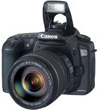
Canon EOS-20D Digital Camera
This 8 megapixel SLR camera has basic features that are simple enough for the average consumer to use, in addition to several advanced options to satisfy professional photographers.
It has a very fast startup time, long battery life, a fully usable ISO range (100-3200), and a very solid body. It can also shoot in a continuous burst mode at 5 frames per second, and can save both RAW and JPEG formats at the same time.
The photo quality surpasses the Canon EOS-10D (the camera's predecessor) and produces resolution as-good-as identical to the much more expensive Canon EOS-1D Mark II. |
|

|
Canon Zoom Super Wide Angle EF-S 18-55mm f/3.5-5.6 USM Autofocus Lens
Good lens for wide angle and landscape shots. |
|
|
|
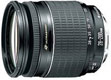
Canon Zoom Wide Angle-Telephoto EF 28-200mm f/3.5-5.6 USM Autofocus Lens
Great all-purpose lens with a wide zoom range. |
|
|
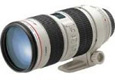
Canon Zoom Telephoto EF 70-200mm f/2.8L IS Image Stabilizer USM Autofocus Lens
The pinnacle in Canon's constant-aperture telephoto zoom lenses, the 70-200mm f/2.8L IS lens can help produce incredible photos. Incorporating Canon’s second generation Image Stabilization technology, this lens responds in as little as 0.5 seconds, while providing up to three stops of correction for
camera shake. Two-stage Image Stabilization can correct for all types of camera shake or just up/down shake (for use when panning with a moving subject).
Its AF system has been refined from previous lenses for better response time and tracking speed, and the new 8-blade circular aperture offers a more pleasing out-of-focus image. Constructed to professional standards, this fast zoom is also highly resistant to dust and moisture. |
|
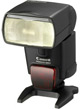
Canon 580ex Speedlite flash
The Speedlite communicates with the Canon 20D camera body to determine information about the image, such as the distance of the subject, then adjusts the power and the flash zoom based on this data in order to provide an accurate exposure.
The 580ex replaces the previous Speedlite model, the 550ex; it is a more powerful flash with a maximum guide number of 58/191 at ISO 100 in meters/feet (at 105mm focal length), and has more consistent color and enhanced controls.
The flash also has a very fast recycle time - 25% faster than its predecessor - and is compatible with Canon's E-TTL (Evaluative Through The Lens) auto exposure technology. It can serve as a wireless master to compatible slave units (with up to four channels and three slave groups), or as a slave to other Speedlites.
|
|
Kenko Teleconverter: Teleplus PRO 300 DG 2.0x for Canon EOS cameras
This teleconverter doubles the range of any attached lens, and works best with telephoto and zoom lenses between 200mm and 500mm. It should not be used with lenses starting under 50mm, but works great with the Canon Telephoto EF 70-200mm lens.
These converters are made with precision quality multicoated optical glass supplied by Hoya. The glass elements are designed to match the optical quality of the attached lens. They also have Gate Array Integrated Circuitry, which enables the converter to maintain signal integrity between the camera body and lens. |
|
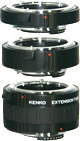
Kenko Automatic Extension Tube Set DG (3 rings) for Canon EOS cameras
Extension tubes are designed to enable a lens to focus closer than its normal minimum focusing distance, which has the effect of magnifying the subject. This enables you to convert almost any lens into a macro lens at a fraction of the cost, while maintaining the original optical quality.
These extension tubes have no optics. They are mounted in between the camera body and lens to create more distance between the lens and the CMOS sensor. By moving the lens farther away from the sensor, it focuses much closer than normal. The greater the length of the extension tube, the closer the lens can focus.
The Kenko extension tube set has three tubes of different lengths: 12 mm, 20 mm, and 36 mm, which can be used individually or in any combination to obtain the desired magnification.
As long as enough light is available, Kenko's extension tubes will maintain auto focus and TTL auto exposure between the Canon camera body and lens. |
|
|
|
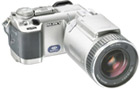
Sony DSC-F707 Digital Camera
Used from 2001 through 2007. The 5 megapixel F707 produces high-quality, sharp pictures with low noise. The camera has a Carl Zeiss lens with a focal length range of 9.7 - 48.5 mm (5x, equivalent to 38 - 190 mm). The swiveled body easily allows for taking shots in awkward positions (such as over the head) and the camera controls are easy to use. |
|
|
|
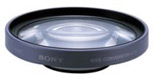
Sony .7x Wide Angle Lens
Great for those shots where you're really cramped for space. |
|
|

|
Sony external flash HVL-F1000 for the DSC-F707
Triggered by a sync cord instead of hot shoe, allowing you to handhold the flash and easily direct or bounce the light as needed.
For this shot of Willie Nelson on the right, I held the flash in my hand and bounced it off of a wall, creating a fill effect similar to light coming in through a window. |
|
|
|
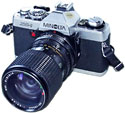
Minolta XG-1 35mm SLR film camera
Used from 1982 to 2001; held up very well. I used 3 lenses, a 28-70mm macro/zoom, a 75-200mm zoom, and a 500mm telephoto. Also, I usually shot with Kodak Royal Gold film (usually ASA/ISO 100).
|
|
|
|
Photohome.com
Allen Matheson
320 Creek Bend
League City, TX 77573
allen@photohome.com
(fastest response is by email)
713-492-7350

|